Rhythm
Give each word a clear center of gravity
Hear and mark English word stress, practise changing word families, and avoid treating every syllable equally.
The idea in a minute
Word stress makes one syllable stand out from its neighbors. It can involve vowel clarity, duration, pitch and loudness together. In banana /bəˈnɑː.nə/ (a common British form), the middle syllable carries the main stress. Stress helps a listener recognize the whole word; a perfect individual consonant cannot always compensate for an unexpected rhythm.
What your mouth is doing
Keep airflow comfortable. On the stressed syllable, give the vowel room to be clear; on unstressed syllables, allow lighter movement without deleting the syllable. Tap one finger once for the main beat. You should not need to shout, tighten your throat or punch every consonant. The target is contrast between syllables, not effort.
Connect it to your first language
Mandarin lexical tone and English stress are different systems: changing pitch on every syllable does not reproduce English prominence. Spanish already uses lexical stress, which is a helpful bridge, but English spelling seldom marks it with an accent. English unstressed vowels can also reduce more strongly. Transfer the idea of prominence, then check its location and vowel quality.
Try this practice sequence
- Listen to computer. Count three syllables and mark com-PU-ter. Read the dictionary stress mark to verify your guess before repeating.
- Tap only on PU and say the complete word. Gradually remove the tap while keeping the same relative prominence.
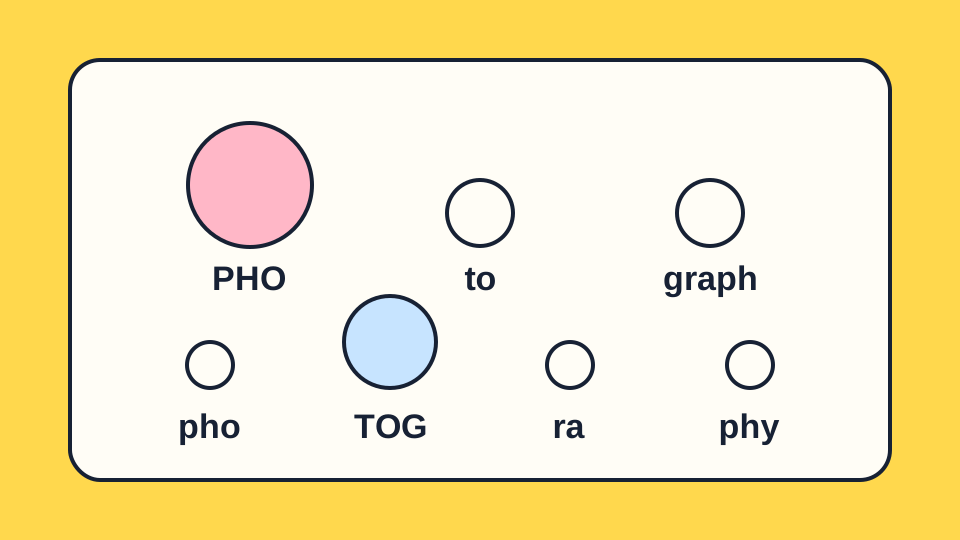
- Compare PHOtograph with phoTOGraphy. The shared spelling does not guarantee shared stress. Learn each member of a word family with its own beat.
- Say “My computer is ready.” Keep the word stress on PU, then change the sentence focus from my to ready. Notice that word stress and sentence emphasis are related but different.
Common traps
Do not rely on “all two-syllable nouns stress the first syllable”: it is a tendency with exceptions. Do not add a syllable merely because spelling looks long. Capital letters in our quiz are visual cues, not a formal phonetic transcription. Dictionary audio and the ˈ mark are better references when a word is unfamiliar.
Notice the contrast
Compare a REcord with to reCORD. Choose the stress from the grammatical context before saying it. Then try a PREsent and to preSENT. If a voice reads an isolated homograph unexpectedly, use the complete phrase or consult noun and verb recordings in a dictionary.
Take it into words
com-PU-ter
PHO-to-graph
pho-TOG-ra-phy
My computer is ready.Pronounce ↗Pronunciation learning FAQ
Is stress just speaking louder?
No. Length, pitch and vowel clarity also contribute. Make one syllable stand out naturally rather than increasing the volume of the entire word.
Sources & scope
PronounceKit provides original explanations and schematic illustrations, with linked pronunciation references. Broad IPA describes selected common US/UK forms, not every accent. Synthesized voices and quiz scores are practice aids. These guides have not been independently validated by a pronunciation specialist; send corrections through Contact.
Contact